Research Interests


Stream Community and Ecosystem Ecology; Restoration Ecology


The broad objective of Dr. Palmer's research is to understand what controls stream ecosystem structure and function. She specifically focuses on restoration ecology and how land use, hydrology and geomorphology influence the health of running-water ecosystems.


Recent Work


Her current research is concentrated on: 1) Evaluating stream ecosystem functions in Coastal Plain lowlands of Maryland and restoration effectiveness; 2) Evaluating the potential for stream restoration to enhance nitrogen removal in Chesapeake Bay tributaries; 3) Climate change impacts on rivers and adaptation options, including models and empirical work on the interactive effects of land use change and climate change on stream ecosystem services.


Recent research includes: 4) effects of land use change on stream ecosystems; 5) synthesizing the scientific status of riverine restoration nationally (NRRSS project); 6) theory and experimentation in restoration; 7) how urbanizing landscapes influence stream fauna and ecosystem processes through changes in the riparian zone, the hydrology, and channel characteristics


Teaching: Dr. Palmer co-teaches a week long summer short course focusing on the fundamental ecological, hydrologic, and geomorphic principles underlying effective stream restoration. This course is offered in Maryland each June and is co-taught by Drs. Peter Wilcock, Jack Schmidt, and Sean Smith. For information about the course, please click here. Dr. Palmer participates in a similar course on the campus of Utah State University that is hosted by Jack Schmidt.


Current Research in Palmer Lab:


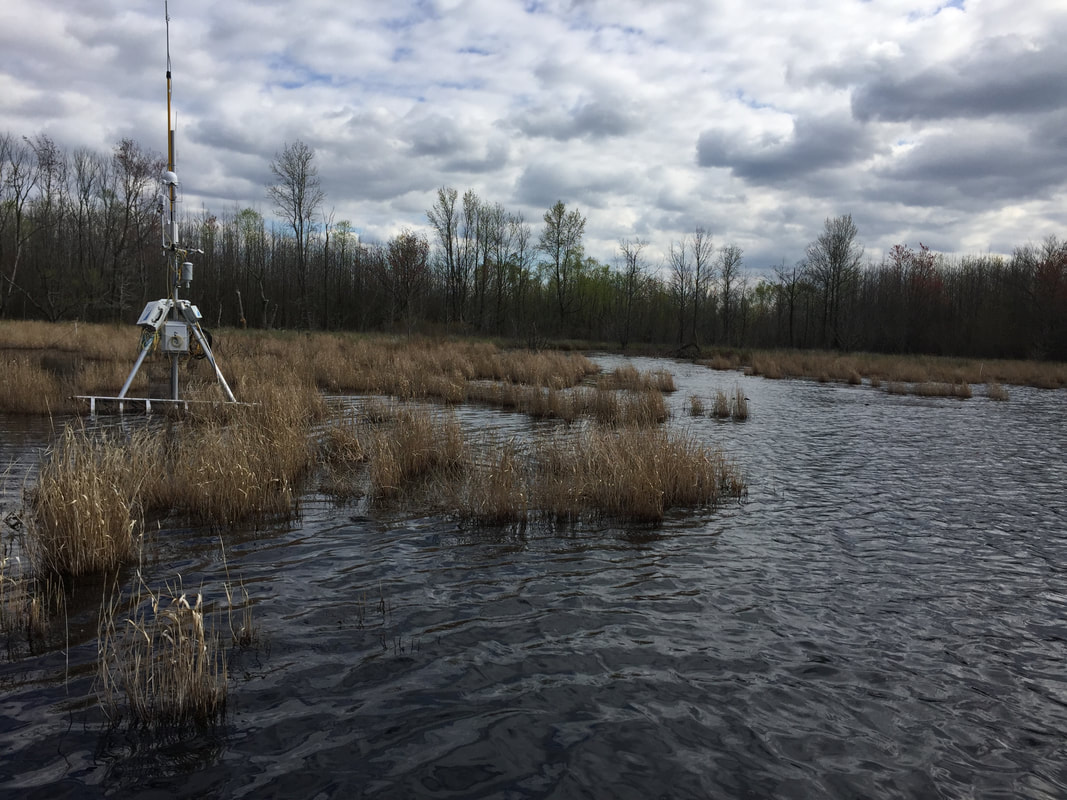
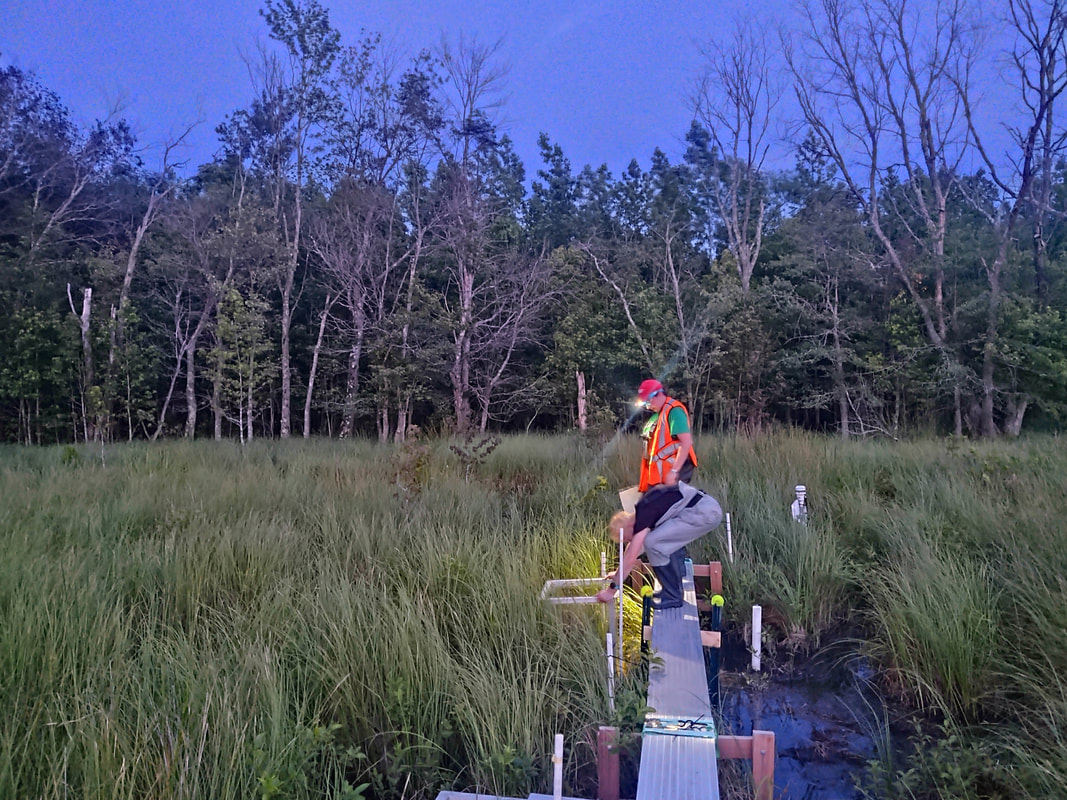
1) Evaluating stream ecosystem functions in Coastal Plain lowlands of Maryland and restoration effectiveness. Historically, the mid-Atlantic had vast expanses of low-lying forests with extensive freshwater wetlands and streams. Much of this land has been converted to farming over the last several hundred years. Ongoing pressures include continued farming and the growth of suburban developments. In recognition of the need for new approaches to systematically monitor and assess hydrologic conditions, wetland/stream ecosystem functions, and their impact on water quality, Palmer and colleagues Drs. Megan Lang, Greg McCarty, and Jerry Ritchie of the USDA-ARS along with Drs. Judy Denver and Scott Ator of USGS have work on-going in the Choptank River watershed. Using remotely sensed data, particularly radar and lidar, and extensive field sampling and experimentation, they are quantifying a variety of ecological functions in lowland streams and wetlands, along an alteration/restoration gradient. Graduate student Owen McDonough is leading the field efforts for the Palmer Lab.


2) Evaluating the potential for stream restoration to enhance nitrogen removal in Chesapeake Bay tributaries. Most efforts to reduce nitrogen in the Chesapeake Bay have focused on land-based BMPs such as the planting of cover crops and establishment of riparian buffers, yet we continue to see degraded water quality. While water quality BMP practices have been implemented for decades and are extremely important, they are not 100%
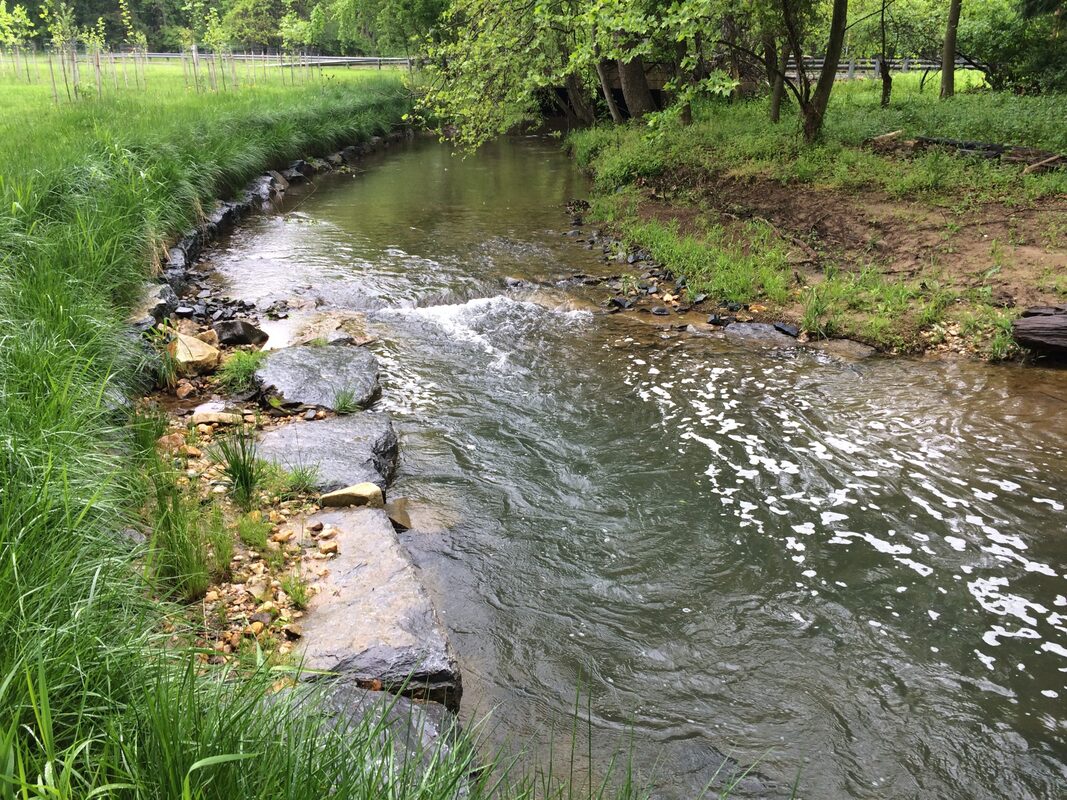
efficient. Excess nutrients and suspended sediments are still reaching coastal waters. The Palmer Lab has multiple projects on-going to determine the effectiveness of stream restoration in reducing nitrogen flux downstream. Along with collaborator, Dr. Solange Filoso (CBL) nitrogen dynamics are being studied in eight restored and degraded upland headwater and lowland boundary streams of Maryland’s Coastal Plain drainage network in Anne Arundel on the Western Shore of the Chesapeake Bay. This information is be used to develop stream restoration targeting protocols to support comprehensive stream restoration strategies. Work by graduate student, Brian Laub of the Palmer Lab focuses on a different set of streams in Anne Arundel County to investigate bed mobility and algal diversity in streams that have been restored to ‘stabilize’ channels.


3) Climate change impacts on rivers and adaptation options, including models and empirical work on the interactive effects of land use change and climate change on stream ecosystem services. Climate change is expected to alter regional patterns in precipitation and temperature, and this has the potential to change flow regimes and thermal profiles of streams and rivers worldwide. The ecological consequences of climate change and the required management responses for any given river will depend on how extensively the magnitude, frequency, timing, and duration of key runoff e
vents change relative to the historical pattern of the natural flow regime for that river, and how adaptable the aquatic and riparian species are to different degrees of alteration. Using U.S. designated Wild and Scenic Rivers, Palmer chaired a team to write a report for the U.S. Climate Change Science Program on climate change and adaptation options for rivers. The report went out for public review in the summer of 2007 and will come out in its final form in winter of 2008. Palmer also worked with collaborators in Sweden, Germany, and Australia to project river discharge under different climate and water withdrawal scenarios and combine this with data on the impact of dams on large river basins to create global maps illustrating potential changes in discharge and water stress for dam-impacted and free-flowing basins. A paper describing the findings was released online in Frontiers in Ecology and the Environment in November 2007; the printed version will appear early in 2008. Finally, work with collaborator Drs. Karen Nelson, Glenn Moglen (U Md), Jim Pizzuto (U Del), and others we have completed work forecasting the interactive effects of climate and land use change on small streams in urbanizing regions of Montgomery County, Maryland (Nelson et al. submitted).


Recent research in Palmer Lab:


4) Through an EPA STAR award, Dr. Palmer has been working closely with Montgomery County, MD Department of Environment Protection to evaluate the effect of land use change on stream ecosystems in four urbanizing watersheds in Maryland. This project involves an interdisciplinary team that includes scientists and policy makers (Keith VanNess, Cameron Wiegand) from Montgomery County DEP, hydrologists (led by Glenn Moglen) and economists (led by Nancy Bockstael) from the University of Maryland, and geomorphologists (led by Jim Pizzuto) from the University of Delaware. As a result of this work, Palmer's group (particularly with postdoctoral associate Karen Nelson) is developing models to forecast the effects of land use change on focal species and on ecological processes. This led to current work has also begun on include the interactive effects of land use change and climate change in these models.


5) Dr. Palmer is also very actively involved in research on theory and experimentation in restoration ecology, particularly the methods and effectiveness of various stream restoration approaches. Palmer along with co-authors Don Falk and Joy Zedler have just completed a new book entitled "Foundations of Restorations Ecology" (2006, Island Press) in which the editors and a cast of eminent scientists explore the relationship between ecological theory and restoration ecology. Her work on the link between theory and restoration dates back to a symposium she organized at the 2002 Ecological Society of America meetings, to earlier synthesis (Restoration Ecology. 5:291-300.) and experimental work with her students and post-docs, Brad Cardinale (Ecology. 83:412-422) and Shane Brooks (Restoration Ecology. 10:156-168).


6) Through an NSF-NCEAS award and funding from the Packard and C.S. Mott Foundations, Dr. Palmer along with collaborators, Dr. J. D. Allan (University of Michigan) and former postdoc Dr. Emily Bernhardt (now at Duke University) organized the National River Restoration Science Synthesis (NRRSS) project. The goal of the NRRSS project was to provide a national level scientific synthesis that can be used to inform policy at local, regional, and national levels. The methods involved in-depth research at eight geographic regions in the United States. The U.S.G.S. was a partner in developing the database structure and they have helped us make the database publicly available (http://nrrss.nbii.gov/). Results from the national synthesis were published in Science in 2005 and results for the Chesapeake Bay region in Frontiers in Ecology & the Environment in 2005. The second phase of this work involved interviewing a large number of practitioners to gather more detailed information on how projects were implemented, monitored, and their degree of success. The results from this work will appear in a special issue of the journal Restoration Ecology sometime in 2007. The NRRSS team has published an article proposing five criteria for evaluating the ecological success of a river restoration project. Their paper on proposed criteria is the lead article in a special issue of the British Ecological Society's Journal of Applied Ecology have received positive comments from an international group of rivers scientists (Jansson et al. 2005) and from a group of restoration practitioners (Gillilan et al. 2005). All of these articles are in the February issue (volume 42 (1)) of the journal. Finally, Palmer and co-author Dave Allan have just published a paper with recommendations for federal policy changes to enhance the effectiveness of river restoration (Issues in Science and Technology 2006).


7) In 2005, Dr. Palmer along with graduate student, Laura Craig and collaborators, Keith Van Ness (Montgomery County MD DEP), Meosotis Curtis (Montgomery County MD DEP), Kevin Kelly (Environmental Systems Analysis) and Amy Hennessey (Environment al Systems Analysis) have been awarded an EPA Ecological Sustainability grant to study the effectiveness of new stormwater management strategies adopted in Maryland in 2000. They will be considering structural and functional ecosystem responses in the stream channel (surface water & streambed), adjacent to the stream channel (groundwater), and below the stream channel (hyporheic) to new SWM strategies. An important part of the work will involve determining the underlying biophysical mechanisms that contribute to the effectiveness of the different SWM design strategies.